
June 1, 2026 · A Family Cooking · South Florida
Seafood can give a private dinner a distinctly coastal character. A beautifully arranged platter or a composed fish course feels at home in South Florida, whether the setting is a private residence, a celebration space, or a yacht. The strongest menu begins with what the guests enjoy and how the meal will be served.
Chef Phil’s menu includes Alaskan king crab legs, broiled Caribbean lobster tail, North Atlantic salmon, and shrimp appetizers. His food photographs also show colorful seafood presentations and individually plated dinners. These examples offer a starting point for a seafood dinner party that feels coordinated, personal, and comfortable for the people sharing the table.
It is tempting to include every seafood dish that sounds appealing, but one clear focus makes the rest of the planning easier. King crab legs suggest a different experience from a plated salmon course. Lobster can establish another direction for a celebratory dinner.
Ask which options are available for the event date and how they would be presented in your setting. Consider the guest list, the desired pace, and the practical details of serving each choice. A menu built around one well-chosen centerpiece can feel more deliberate than a collection of premium ingredients that have no clear relationship to one another or to the occasion.
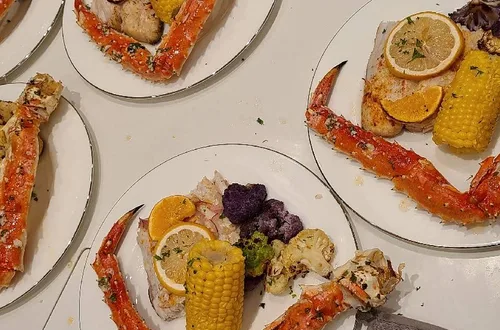
Chef Phil’s published king crab dish pairs the shellfish with accompaniments including broccoli, corn, and biscuits. The photograph shows a generous, colorful presentation that can inspire a celebratory seafood meal. It also illustrates how supporting dishes shape the character of the plate.
Discuss whether you want that general direction or a different accompaniment plan. Ask about portions, serving style, utensils, and the table space needed for the proposed menu. Confirm the current preparation rather than assuming an older description is a fixed package. The goal is to make the meal enjoyable to eat as well as attractive to look at.
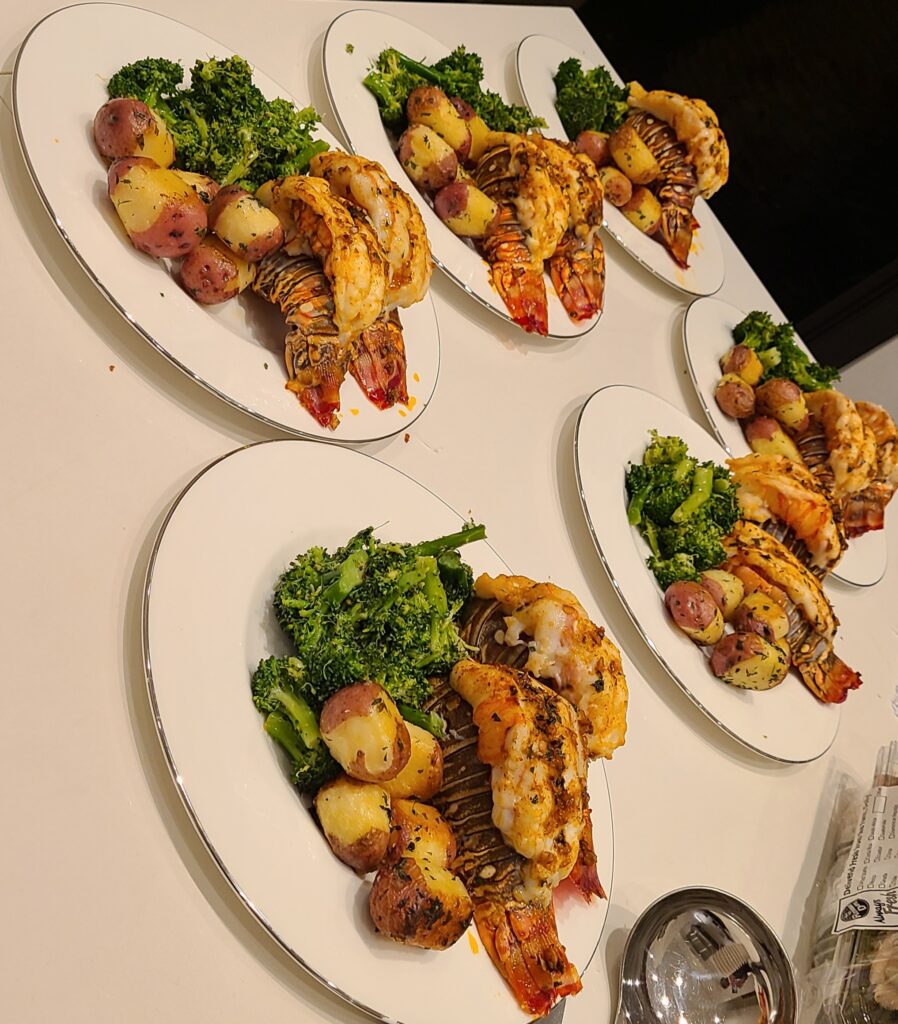
Broiled Caribbean lobster tail appears on the menu with butter, broccoli, and potatoes. It offers another starting point for a seafood-centered dinner without requiring the entire event to revolve around a large shared presentation.
Explain whether the occasion is an intimate anniversary, a birthday gathering, or a dinner with friends. That context helps guide discussions about portion style and the sequence of courses. If some guests prefer another protein, ask how an alternative can fit the same dinner. Confirm ingredient availability before announcing a final menu, and keep the overall plan flexible enough to accommodate a thoughtful substitute if one becomes necessary.
The menu’s herb-crusted North Atlantic salmon provides a fish-focused option alongside the shellfish choices. Its listed accompaniments include rice and vegetables, showing another way to create a complete plate with several textures.
A salmon dinner may appeal to guests who prefer an individually composed course, but suitability still depends on their actual preferences and dietary requirements. Do not treat fish as an automatic alternative for every guest who avoids shellfish. Ask what each person can enjoy, then discuss the final preparation with the chef. The best choice is the one that works for the group, not simply the one that looks most convenient on paper.
Shrimp can introduce a seafood dinner without repeating the main course too closely. Chef Phil’s menu includes shrimp with avocado over cucumber and spicy cocktail shrimp shots. Each suggests a different flavor profile and way of presenting an opening bite.
If the main course already features substantial shellfish, consider whether another seafood appetizer adds useful variety or makes the menu feel repetitive. A vegetable-focused starter may provide a different contrast. Explain whether guests will mingle or sit down immediately, and ask which opening would suit the format. The first course should create interest while leaving room for the meal that follows.
A seafood dinner feels more complete when the sides have a purpose. Vegetables can add color and contrast, while potatoes, rice, or bread create another texture and help establish the style of the meal. Choose accompaniments as part of the whole plate.
Avoid treating every course as a separate decision. A rich sauce followed by another rich preparation may need a lighter element elsewhere. The menu’s salads and vegetable dishes can provide inspiration for that conversation. Ask Chef Phil how the courses work together, and share whether your guests prefer a hearty dinner, smaller portions, or a longer sequence of tastes and presentations.
Seafood-focused menus require clear guest communication. Ask directly about allergies and dietary requirements, including ingredients that may appear in sauces, breads, or side dishes. A person who avoids one type of seafood may have different needs from someone who prefers another protein.
Share the information before the menu is confirmed and ask about preparation limitations. Also provide details about the kitchen, dining area, access, and event timing. Clarify what staffing, serving equipment, tableware, and cleanup are included in the proposal. When the practical arrangements are settled early, the host can focus more fully on welcoming guests and enjoying the experience.
A seafood celebration does not need an oversized menu to feel special. It needs a clear centerpiece, accompaniments that belong with it, and a service plan that suits the guests and the setting. Chef Phil’s menu and photographs offer several ways to begin.
Explore the gallery for presentation ideas, then contact A Family Cooking with your date, location, guest count, and preferred seafood direction. Confirm current availability, portions, dietary discussions, service scope, and pricing before booking. Whether king crab, lobster, salmon, or another agreed dish becomes the centerpiece, careful planning helps create a dinner that feels connected to the occasion and enjoyable from the opening bite to the final course.
A shared event summary helps everyone follow the same expectations for the meal, its timing, and the setting.